After the Clocks Change: A Realistic Movement Plan for Britain's Darkest Weeks
Photo: Unknown, CC0, via Wikimedia Commons
There's a particular kind of British optimism that strikes in early autumn. You buy a new waterproof, book a few runs into the diary and tell yourself this will be the year you don't go into hibernation. Then the clocks change, the rain settles in sideways and it's dark before you've cleared your inbox. By Bonfire Night, the gym bag is somewhere under the stairs and the only movement you're planning is from desk to kettle.
That's not a character flaw. It's a seasonal shift. The dark weeks ask something different of us, and the people who keep moving through them tend to be the ones who stop trying to force a summer routine into a winter life. This isn't about turning November and December into a personal best season. It's about keeping the thread going so that January doesn't feel like starting from scratch.
Lower the bar, not the frequency
One of the most useful adjustments for the darker months is to change what you're measuring. Instead of asking how hard you trained, ask how often you moved. A twenty-minute walk in the rain counts. A short mobility session before bed counts. So does dancing around the kitchen while the pasta boils, even if it doesn't look impressive on a watch.
Think maintenance rather than transformation. Aim for two or three planned sessions a week and treat everything else as a bonus. If you usually chase a faster parkrun time or a heavier lift, give yourself permission to park those goals until the light returns. Use the winter to work on technique, flexibility, balance or simply the habit of turning up. Momentum is easier to protect than to rebuild.
Make the class diary your anchor
When motivation is low, a booked class is more reliable than a vague intention to 'do something later'. The key is choosing one that fits the reality of a dark Tuesday, not the fantasy version of yourself who has endless energy and a perfectly packed gym bag.
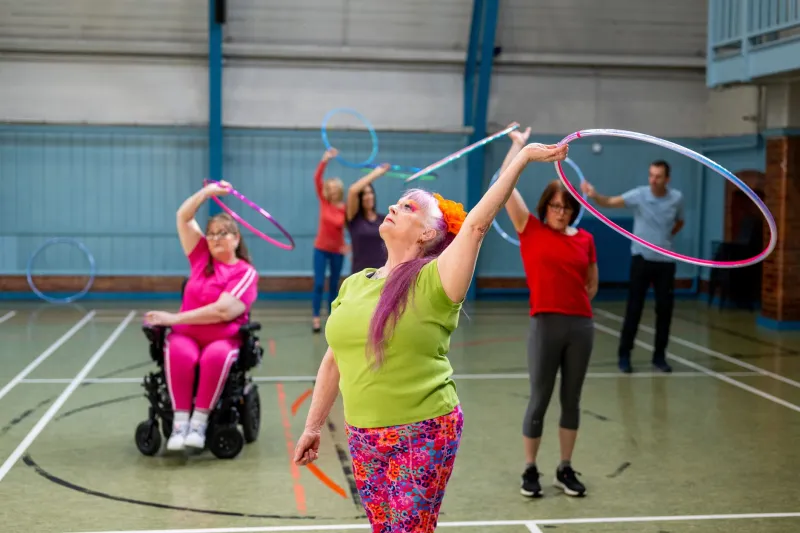
Look at what's within a short walk or bus ride of home or work. Council leisure centres, community halls and local studios often run evening classes that are cheaper and friendlier than people expect. Dance fitness, beginners' yoga, Pilates, boxercise, indoor climbing and adult ballet all tend to fill up in the winter for good reason: they're indoors, they're structured and they get you out of the house before the evening disappears.
Try a taster session before committing to a block. Check whether you need special kit, whether the room is warm, and whether the instructor offers modifications. A good class should make you feel like a beginner is welcome, not like you've wandered into a rehearsal for people who already know the routine. If you can, book the same slot each week and treat it like an appointment. The diary entry is half the battle.
Micro-workouts for the dark evenings
Not every night needs a full session. Micro-workouts are ideal for the weeks when work runs late, the trains are delayed and leaving the house again feels unreasonable. The trick is to make them specific enough that you actually do them.
Try a ten-minute circuit after you get changed out of your work clothes: squats, press-ups against the kitchen counter, glute bridges and a plank. Or use the advert breaks for stair intervals, mobility drills or a gentle stretch while the telly is on. Keep a resistance band by the sofa and a pair of trainers by the door. Small barriers matter more than we like to admit.
If you're desk-bound during the day, set a reminder to stand up and move every hour. A two-minute walk to fill your water bottle, a few shoulder rolls and a short stretch for your hips can make the evening feel less creaky. It won't replace a proper training session, but it keeps the body in the conversation.
Walking when the weather is grim
Wet-weather walking is mostly a kit problem, not a motivation problem. A decent waterproof shell, a cap with a peak, grippy shoes and a reflective layer will get you out the door on far more days than you'd think. If you're walking after dark, stick to well-lit routes, tell someone where you're going and take a torch or use your phone light. Safety first, smug step count second.
Lower your expectations of the walk itself. A fifteen-minute loop around the block before dinner is better than waiting for a dry Saturday. Get off the bus a stop early. Walk to the shop instead of ordering. Suggest a walking catch-up instead of another coffee. If you're meeting a friend, the social bit does a lot of the heavy lifting on a grim evening.
And if it's truly awful outside, don't treat the day as a write-off. Walk laps of a shopping centre, use a covered market, or do a few lengths at your local pool. The point is not to be tough. The point is to keep the habit warm.
Protect your mood as well as your step count
Darkness affects people differently, and it's worth being honest about that. Some people sail through winter; others feel flattened by it. Try to get outside in daylight when you can, even if it's just a lunchtime walk. Keep your sleep routine steady. If low mood is lasting or affecting daily life, speak to your GP rather than trying to out-train it.
Movement can help, but it isn't a cure-all. The best winter plan is one that includes rest, company and a bit of kindness towards yourself. A missed class is not a moral failure. It's just a missed class.
Plan for the festive pile-up
December is not a normal month. Parties, travel, family visits and mince pies will disrupt the best-laid plans, so decide now what your minimum dose looks like. Maybe it's one class a week plus a daily walk. Maybe it's two short home sessions and a long weekend wander to see the Christmas lights. Write it down and protect it.
Book classes early, because they fill fast. Keep a spare pair of leggings in your bag. If you're visiting family, suggest a walk after lunch or a silly dance game with the kids. The aim is not to cancel Christmas. It's to avoid treating the whole of December as a write-off before it's even begun.
The dark weeks don't have to be the dead weeks. Move a little, often, in whatever way fits the life you actually have. Move well, feel strong, keep moving.