The Word We Should Retire: How Dance Classes Are Rewriting Britain's Relationship With Movement
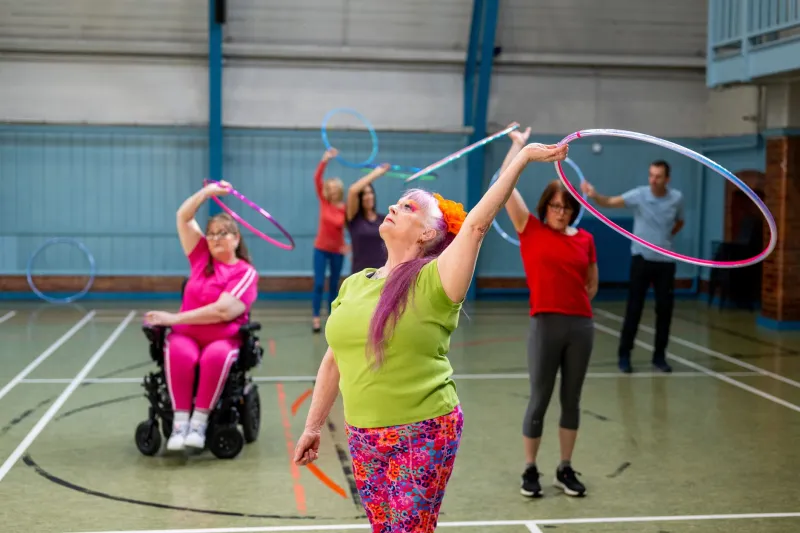
There is a moment in many British adults' lives when the word 'exercise' stops meaning play and starts meaning homework. It might happen at school, in a changing room, on a treadmill or in front of a mirror. Somewhere along the way, movement becomes something you should do, something you're behind on, something that has to hurt to count.
That's a problem. Not because exercise is bad — it isn't — but because the way we talk about it often assumes a audience that already likes gyms, already understands the kit, and already feels at home in a room full of lycra. Plenty of people don't. They are not lazy. They are simply not convinced by the invitation.
This is where dance classes have quietly been doing something clever. Not all of them, and not perfectly, but enough to suggest that the fitness industry could learn a thing or two from the community hall.
The baggage of 'exercise'
The word carries history. For some people it means cross-country runs in the cold, being picked last, or a PE teacher with a whistle and a grudge. For others it means gyms: the smell of disinfectant, the unspoken rules, the feeling that everyone else knows what they're doing. Add the language of punishment — 'burn', 'no pain no gain', 'earn your dinner' — and it's no wonder many adults opt out.
We don't tend to talk about other healthy habits this way. Nobody says they're going to 'punish' themselves by eating vegetables or 'burn off' a conversation with a friend. But fitness language is full of debt and discipline. It frames movement as a transaction: you pay for your sins with sweat. That might motivate some people. For many others, it's a reason to stay on the sofa.
There's also the boredom problem. Not everyone wants to run on a machine staring at a wall or lift weights in a room where the music is bad and the mirrors are unforgiving. Some people need music, laughter, a bit of learning and the feeling of being part of something. That's not a lack of discipline. It's a different set of motivations.
What puts people off
The barriers are practical as well as emotional. Cost matters. Time matters. Confidence matters. So does the fear of being the worst person in the room. Gyms often sell progress as a solo project, which suits some temperaments but leaves others cold. If you're already knackered, self-conscious or short on cash, a contract and a induction session can feel like a lot of commitment for something you're not sure you'll enjoy.
Dance classes don't automatically solve all of that. They can be intimidating too, especially if you've never done one. But the good ones tend to lower the stakes. They usually start with a warm-up that doesn't demand you already know the steps. They repeat things. They let you laugh when you go the wrong way. And they often attract people who are there for the same reason: to move, switch off and have a decent time.
Why dance changes the script
Dance asks you to learn rather than endure. You're not just counting reps; you're picking up a rhythm, remembering a sequence, moving with other people. That's a different kind of challenge, and for many adults it's far more engaging than another session on the cross-trainer.
It also gives movement a social life. A weekly salsa class, adult beginners' ballet, street dance or ceilidh night becomes a fixture in the diary, not a punishment to be endured. You see the same faces. You get a bit better. You have a chat afterwards. That combination — competence, company and music — is powerful, and it's why so many people who 'hate exercise' will happily spend an hour learning a routine.
There's a physical benefit too, of course. Dance can improve balance, coordination, cardiovascular fitness and strength, depending on the style. But leading with the health pitch misses the point. The reason people come back is usually simpler: it's fun, and they don't feel like an outsider.
What good instructors do differently
Good dance instructors are brilliant at changing the conversation without making a fuss about it. They say 'no experience needed' and mean it. They show the basic step before the fancy version. They offer a way to mark the routine if you're not ready to jump. They don't spend the whole class staring at themselves in the mirror. They make it clear that coming alone is normal, that getting it wrong is normal, and that nobody is auditioning for anything.
They also avoid the language of punishment. Instead of promising to 'torch calories' or 'work off' the weekend, they talk about energy, rhythm, confidence and learning. That might sound soft to some fitness purists, but it's actually smart pedagogy. People stick with things they feel competent at, and competence grows faster when you're not being shouted at.
A fair caveat
None of this means gyms are bad or that everyone should dance. Plenty of people love lifting, running, swimming or cycling, and those routes are just as valid. The argument isn't that dance is superior. It's that the way we sell movement matters, and the UK has a lot of adults who have been quietly put off by the language and culture of fitness.
If the word 'exercise' makes you bristle, try dropping it for a week. Call it movement. Call it a class. Call it a night out with better shoes. See what happens. You might find that the barrier was never your body. It was the invitation.
Dance classes are not a magic fix for public health, and they won't suit everyone. But they offer a useful reminder: movement doesn't have to be a punishment to be worthwhile. Sometimes the best way to get people moving is to stop telling them off and start giving them a reason to come back. Move well, feel strong, keep moving.