Why the Slow Lane Might Be Your Best Winter Training Partner
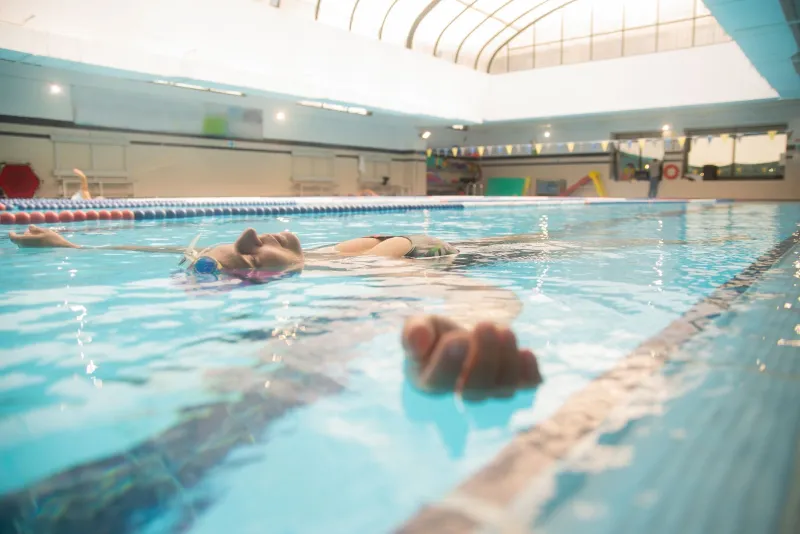
There’s a particular kind of quiet in a local pool on a weekday morning. The lights are on, the water is doing its soft blue thing, and the only real soundtrack is splashing, a whistle every now and then, and someone’s flip-flops heading for the showers. For a lot of us, that’s a far more appealing winter training environment than a packed gym floor or another dark, damp walk after work.
Swimming slowly doesn’t get much attention in fitness culture. It isn’t flashy. It doesn’t come with a leaderboard. But for building a steady movement habit through the colder months, the slow lane is seriously underrated. It gives you cardiovascular work, whole-body movement and a bit of strength without hammering your joints — and it asks for nothing more than a costume, a towel and a bit of lane awareness.
The case for a winter pool base
Winter in the UK has a way of shrinking our movement options. The commute is darker, the pavements are wet, and the idea of a cold walk at 7pm loses its charm somewhere around late November. A local leisure pool offers something different: a warm, contained environment where you can move without layering up like a weather presenter.
It’s also low-impact in the truest sense. Water supports your body while you move, which can suit people managing stiff joints, returning from injury or simply wanting a break from high-impact sessions. You don’t need to be a beautiful swimmer. You don’t need to be fast. You just need to turn up and move at a pace you can repeat.
The bigger win is consistency. A 30-minute swim is manageable. It doesn’t leave you wrecked for the rest of the day. And because it’s based at a local pool, it can slot into the sort of ordinary week where “training” has to fit around work, school runs and the fact that it gets dark at about the same time as lunch.
A simple 30-minute session
This isn’t a swim squad set. Think of it as a movement sandwich: gentle warm-up, steady middle, mobility at the end.
Warm-up: 6–8 minutes. Start with two or three easy lengths of whatever stroke feels comfortable. If you’re new to swimming, alternate a length of front crawl with a length of breaststroke or backstroke. The aim is to raise your temperature and find your breathing, not to impress the person in the next lane. If you need to stop at the wall, stop at the wall.
Main set: 15–18 minutes. Swim steady lengths with short rests. A straightforward version is six rounds of two lengths, resting for 20–30 seconds between rounds. If that’s too much, do one length at a time. If you’re more comfortable, reduce the rest or add a couple of lengths. The pace should feel like a good conversation — effortful, but not desperate.
Poolside mobility: 4–5 minutes. Before you head for the showers, do some gentle shoulder circles, slow arm swings, hip circles and a few calf raises at the side of the pool. If your pool has steps, use them for a slow calf stretch. This is also a good moment to notice how you feel: shoulders loose, breathing calmer, legs less stiff than when you arrived.
That’s it. No complicated kit, no intervals that require a maths degree. Just enough movement to count, and enough simplicity that you’ll actually do it again next week.
Lane etiquette without the stress
Lane swimming can feel like a secret society if you’re new to it, but the rules are mostly common sense.
First, check the signs. Most pools split lanes by speed — slow, medium, fast — and some have a family or general swim area. If you’re unsure, ask the lifeguard. They’d much rather point you in the right direction than watch you hover nervously by the deep end.
If you’re sharing a lane, swim in a circle where possible: up one side, back the other. Don’t stop in the middle of the wall where people turn. If someone faster catches you up, let them pass at the next wall. And if you need a breather, move to the corner or hold the side rather than treading water in the middle of the lane.
One more thing: nobody is judging your stroke. Most people are concentrating on their own breathing, their own goggles and their own decision to be there at 7am. The slow lane is not a punishment lane. It’s a sensible place to build confidence.
Cost-saving tips for UK pools
Local authority pools, leisure trusts and community centres often have more flexible pricing than big private gyms. Look for off-peak sessions, which are usually cheaper and quieter. Ask about resident cards, concession rates and flexible memberships that include swimming but don’t lock you into a year-long contract.
If you’re going regularly, a monthly swim pass may work out cheaper than paying per visit. If you’re going occasionally, pay-as-you-go is fine. Also check whether your local pool offers free or discounted swimming for older adults, students or people on certain benefits — provision varies across the UK, but it’s always worth asking.
And don’t forget the small stuff: take your own goggles, towel and padlock if the lockers need one. It’s not glamorous, but a £4 padlock saves a lot of faff.
Adapting the session
If you’re a beginner: use a float for part of the session, take longer rests and break lengths into half-lengths if needed. There’s no rule that says you have to swim from end to end without stopping.
If you’re older or returning after a break: start with two sessions a week and keep them short. Use the pool’s steps or ramp if they have one, and check session times — some pools have quieter sessions aimed at older swimmers or people who want a calmer environment.
If you’re coming back from injury: get advice from a physio or GP if you’re unsure, and start gently. Water is supportive, but it’s not a magic eraser for pain. Slow and steady still applies.
Make it a winter habit
The secret to winter movement isn’t motivation. It’s lowering the barrier. A pool session is easy to repeat because it’s warm, local and finite. You know exactly what you’re doing, you know it won’t take all evening, and you know you’ll leave feeling a bit more like yourself.
So find your local pool’s timetable, pick a quiet off-peak slot, and give the slow lane a go. Move well, feel strong, keep moving — even when the sky is doing its best impression of a closed curtain.