Walk, Talk, Repeat: Why the Pavement Is Britain’s New Social Gym
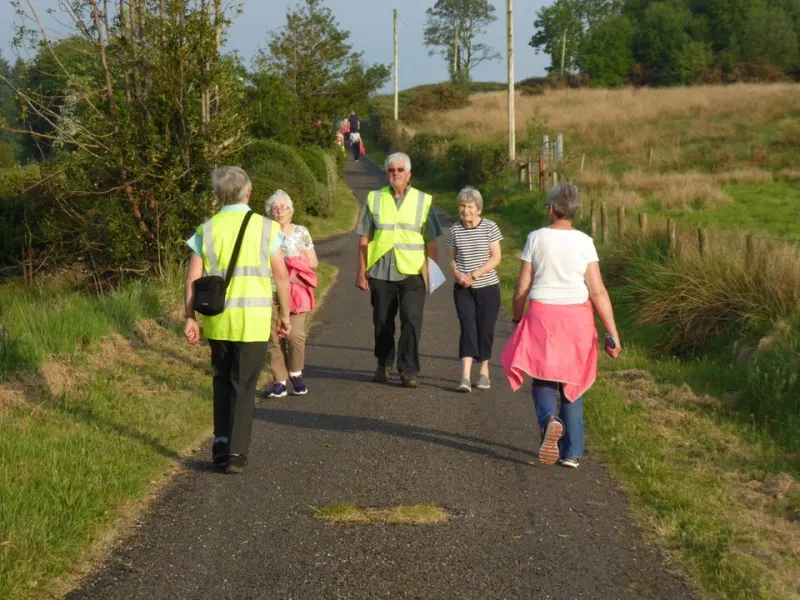
Photo: Kenneth Allen , CC BY-SA 2.0, via Wikimedia Commons
On a damp Tuesday evening in Leeds, a group of about twenty people gathers outside a café. Nobody is wearing matching kit. Nobody is warming up with high knees. They are mostly chatting about the weather, the bus timetable and whether the café stays open long enough for a post-walk tea. Then they set off in pairs and small clusters, down a residential street and towards the park.
This is the walking club in its modern British form. It is not a race, a boot camp or a branded fitness experience. It is a loop, a time and a reason to leave the house. And it is spreading.
From Ramblers groups and Ramblers Wellbeing Walks to informal walk-and-talk meetups organised on WhatsApp, the organised stroll has become one of the most accessible forms of movement in the UK. You do not need a membership card, a personal best or a decent pair of leggings. You need shoes and a vague willingness to be outside for an hour.
The club that does not feel like a club
Gym culture works for plenty of people, but it also leaves plenty behind. The mirrors, the music, the unspoken etiquette of the weights room — none of it is neutral. For some people, especially those returning to movement after illness, injury or a long gap, the gym can feel like a test they are destined to fail.
Walking clubs remove most of that pressure. You can walk at the back. You can wear what you like. You can stop to tie a shoelace without feeling like you have ruined the session. The social side is not a bonus; it is the point. People come for the conversation as much as the steps.
Dr Priya Nair, a clinical psychologist based in Manchester, says this matters more than we often admit. 'The gym asks people to perform,' she says. 'A walk asks them to be present. For many people, that shift is the difference between avoiding movement and looking forward to it.'
That is not anti-gym snobbery. It is a recognition that movement comes in different packages. A pavement loop can be a first step back into activity, a weekly anchor in a lonely week, or simply a pleasant way to spend a Saturday morning that does not involve a screen.
Why walking together attracts gym refugees
There is a practical reason walking clubs are thriving: they are cheap. Many are free or cost a couple of pounds. There is no contract, no induction and no direct debit. In a cost-of-living squeeze, that matters.
There is also a social reason. Britain has a long tradition of walking for pleasure — rambling, fell walking, coastal paths, Sunday strolls — but the new wave is more urban and less formal. Town-centre loops, park circuits and canal towpaths are being used as social spaces. Dog walkers join without dogs. Parents push prams. Older people mix with students. The pace tends to be inclusive because the group wants to stay together.
And then there is the mental-health dividend. Walking outdoors, especially in daylight, has been linked with improved mood and reduced stress. But the group element adds something else: conversation without the intensity of a face-to-face coffee. Some people find it easier to talk while walking side by side. The words come out more naturally when nobody is being stared at across a table.
The darker months test
As the evenings draw in and the clocks change, motivation often dips. This is where the walking club earns its keep. A regular Tuesday or Saturday walk gives structure to the week. It gets people outdoors in daylight when the sofa is calling. It turns exercise into an appointment with other people, which is often more reliable than an appointment with yourself.
For seasonal fitness, that is a quiet superpower. You do not need a grand plan. You need a loop, a torch, a waterproof and a friend who will notice if you do not turn up.
The social prescribing connection
Walking clubs are also increasingly part of the social prescribing conversation. In parts of the UK, GP surgeries and link workers connect people with community activities — gardening, art groups, walking — as a way of supporting wellbeing alongside medical care. A walking group is an obvious fit: low cost, low barrier, outdoors and social.
One social prescribing link worker in Bristol describes the appeal simply: 'We are not sending people to boot camp. We are connecting them to a Tuesday morning loop around the park. Sometimes that is the most useful thing we can do.'
It is not a cure-all, and it should not be sold as one. But it is a sensible, human-scale intervention. Movement plus company plus fresh air is not a radical prescription. It is just a good one.
How to find or start a club
Finding a group is easier than many people expect. The Ramblers website lists organised walks across the UK. Ramblers Wellbeing Walks offers shorter, gentler routes in many areas. Local libraries, community centres, parks departments and volunteer networks often advertise walk-and-talk meetups. Facebook groups and noticeboards still do a lot of quiet work here.
Starting your own is also possible. Pick a safe, circular route that takes forty-five to sixty minutes. Choose a regular time and a clear meeting point. Keep the pace inclusive and the route easy to shorten in bad weather. Set up a simple group chat, share a map, and make it clear that newcomers can walk at the back without apology. If the group grows, think about first aid, insurance and a trained walk leader — especially for longer or more remote routes.
Most of all, resist the urge to over-brand it. The success of these clubs comes from their ordinariness. A walk, a chat, a café at the end. That is the whole offer.
Britain's pavements are not a replacement for every kind of fitness. But they are becoming a very good social gym: open to all, powered by conversation and available on a Tuesday evening when the gym feels like too much. Move well, feel strong, keep moving.