Chalk Dust and Courage: A Beginner's Night at Adult Gymnastics
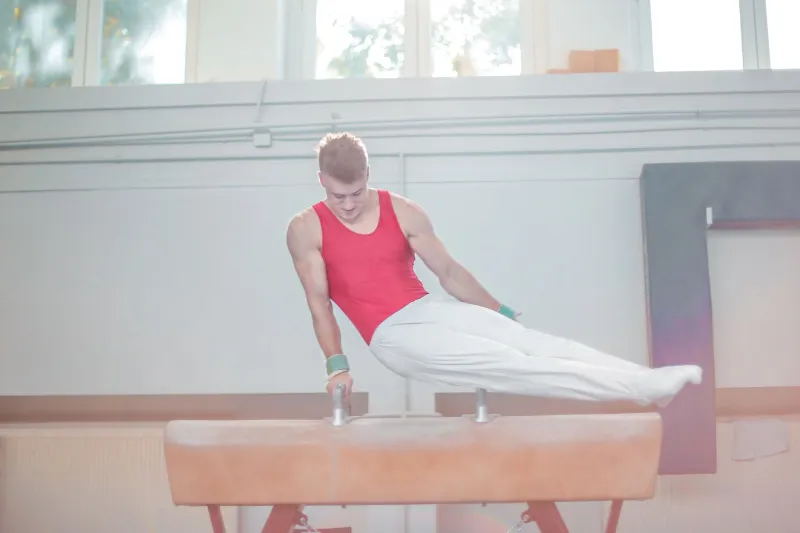
There is a particular silence that falls over a church hall when thirty adults are asked to take their shoes off and stand on a line. It lasts about three seconds. Then someone’s ankle cracks, someone else laughs, and the spell breaks. Welcome to adult gymnastics.
On a damp November evening in a hall that usually hosts toddler ballet and the local choir, the mats are already down. There is a low beam at one end, a vault run-up at the other, and a stack of chalk blocks that look like giant sugarcubes. The average age is somewhere around thirty-eight. The average level of confidence is harder to judge.
The warm-up that makes you rethink your desk chair
We start with walking. Just walking, heel to toe, across the floor. Then walking backwards. Then walking sideways while the coach shouts prompts that sound simple and are not: ‘Look where you are going, not at your feet.’ Within five minutes I have discovered that my left hip does not particularly enjoy moving independently of my right shoulder, and that my ankles have been on autopilot since roughly 2014.
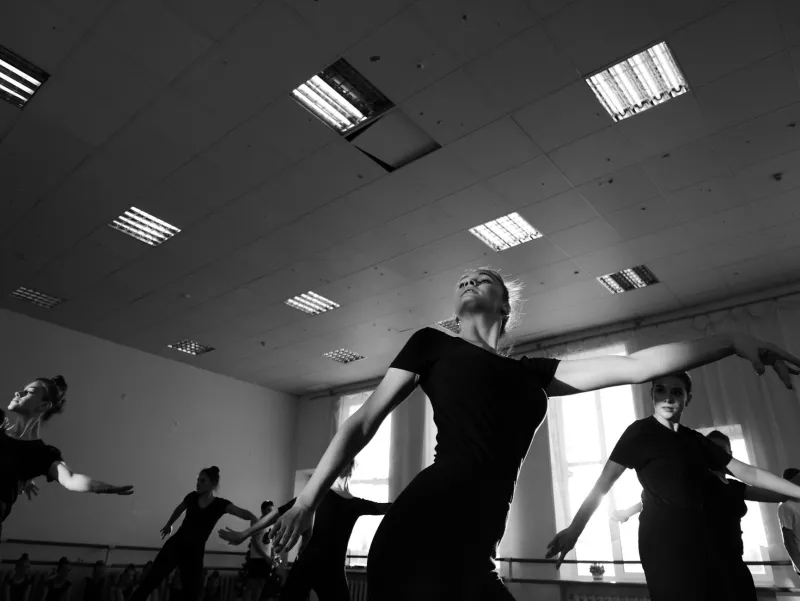
The warm-up is not a jog around the hall. It is a slow, deliberate tour of every joint that a desk job has quietly switched off. Wrists circle. Shoulders roll. We squat, reach and hinge. Nobody is asked to touch their toes. Nobody is asked to be good at it. The coach keeps saying ‘range, not tension’, which sounds like a yoga mantra but turns out to be a useful way to think about a grown-up body preparing to go upside down.
Floor shapes for grown-up bodies
The first real task is a forward roll. Not a somersault, not a cartwheel, just a roll from a crouch to a crouch. Half the room groans. The other half looks quietly terrified. The coach breaks it down: hands down, tuck your chin, round your back, push. We practise on a wedge mat first, which makes the whole thing feel less like a dare and more like a puzzle.
What surprises me is how much strength is hiding in these ‘basic’ shapes. A roll asks something of your core, your shoulders and your neck. A handstand prep — hands on the floor, feet on a box, hips stacked — is a shoulder workout dressed up as play. We spend ten minutes on hollow holds and arch holds, the two shapes that underpin almost everything else, and my midsection is filing a formal complaint by the second round.
The mood is loose. People chat between attempts. A woman next to me says she booked the class because she was bored of the gym and wanted to ‘do something that felt like being a kid again, but with a kneepad’. That seems to be the general consensus.
The beam is lower than your ego
After a water break, we move to the low beam. It is maybe thirty centimetres off the floor, which is not high, and yet it might as well be a tightrope. The task is simple: walk across, turn, walk back. Then walk with one foot in front of the other. Then stand on one leg for three seconds.
The beam exposes everything. It exposes the ankle you sprained in 2019 and never quite trusted again. It exposes the habit of holding your breath when you concentrate. It exposes the fact that balance is not a fixed talent but a conversation between your feet, your eyes and your inner ear — and that conversation can be practised.
Nobody falls off dramatically. A few people wobble, step down, laugh and get back on. The coach offers a hand to anyone who wants it. There is no pressure to go higher, no suggestion that the low beam is a stepping stone to something scarier. For most of the room, the low beam is the destination, and that is plenty.
Landing is the whole point
The final section is the vault run-up, minus the vault. We practise the approach: a few steps, a hurdle, a two-foot take-off onto a mat, then a controlled landing with bent knees and arms out. It looks easy. It is not. The landing is where the whole session quietly makes its point.
Gymnastics is often framed as a sport of flight — the swing, the flip, the moment in the air. But the grown-up version is mostly about landing. It is about absorbing force, finding your balance and knowing that your body can handle the arrival as well as the launch. That is a useful skill for a Saturday park run, a muddy walk or the simple act of carrying a heavy bag up a flight of stairs.
By the end, my wrists are tired, my shoulders are warm, and I have done something I have not done in years: moved in a way that felt genuinely unfamiliar. Not painful, not punishing, just new. The coach hands out a short list of things to practise at home — wall handstands, ankle rocks, a few minutes of hollow holds — and nobody groans.
Why it sticks
Adult gymnastics is not a secret, exactly, but it still feels like one. Clubs across the UK now run beginner sessions for grown-ups, often in leisure centres and village halls, and they tend to attract people who want strength without the mirror, mobility without the yoga mat and a bit of play without the pressure to be good at it.
The barrier is not fitness. It is the fear of looking silly. The remedy, it turns out, is a room full of other adults who are also worried about looking silly, and a coach who has seen it all before. You do not need to be flexible. You do not need to be light. You do not need to have done gymnastics as a child. You just need to take your shoes off and stand on the line.